
Short answer: Lifting weights is great, but it isn't where most adults over 40 should start. At Results Fitness Ridgefield, every client starts with ISOPHIT, which we call the Foundation. Isometric training lets us load your muscles and tendons hard while your joints stay still and protected. Once your tendons and joints can handle it, weights build on top of that base instead of breaking it down.
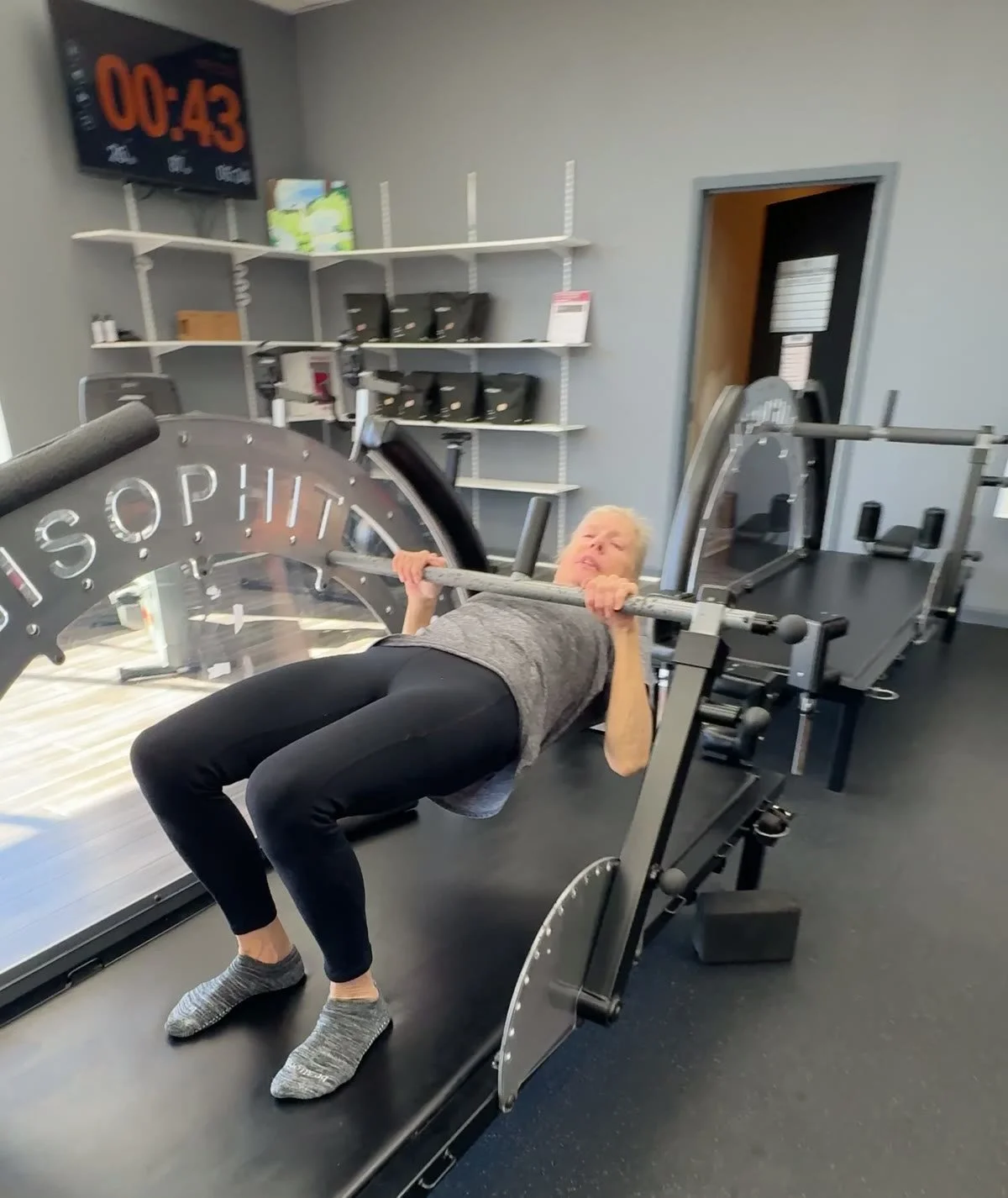
What's the difference?
Lifting weights (dynamic training) means moving a load through a range of motion: squatting a barbell, pressing dumbbells, pulling a cable. You get strength, muscle and power. You also get the most stress at the points where joints are most vulnerable: the bottom of a squat, the top of a press, the turnaround of every rep.
ISOPHIT is isometric training. You push or pull against a fixed surface and hold a position. Nothing moves, but the effort is real: you can work at very high intensity because there's no weight to drop, no bar path to manage and no momentum. Your coach sets the joint angle, so we decide exactly where the load goes.
Both build strength. The difference is control: isometrics let us choose the angle, the effort and the duration with precision, which is why we use them first.
Why we call ISOPHIT the Foundation
Most people who come to us aren't short on motivation. They're short on joints that trust them: a knee that complains on stairs, a shoulder that pinches overhead, a back that tightens after a long drive. If we hand them a barbell on day one, we're asking those joints to do something they aren't ready for.
So we build in this order:
Tendons and joints first. Tendons connect muscle to bone, and they adapt more slowly than muscle does. Research on tendon training shows that tendons get stiffer and more resilient when they're exposed to high loads, around 90% of your maximum effort, held for a few seconds at a time, over 12 weeks or more (Bohm et al., 2015). Isometrics are one of the safest ways to reach that intensity, because you can push near your maximum without moving a heavy weight through a painful range.
Then muscle and movement. Once your tendons can handle load, and if your goals call for it, dynamic lifting adds muscle size, power and coordination on a base that won't give out.
Then performance. Golf, tennis, skiing, chasing grandkids. That's what the strength is for.
Muscles can get stronger in a few weeks. Tendons take months. Lifting heavy before your tendons catch up is a common reason people over 40 get hurt in their first year of training. The Foundation closes that gap.
What isometrics do that weights don't
You pick the angle. If your knee hurts deep in a squat but not halfway down, we load it halfway down. You get strong without poking the problem.
You can go hard safely. Maximum effort without a weight over your head or on your back.
Less soreness, faster recovery. No lowering phase means less of the muscle damage that leaves you limping for two days. That makes it easier to stay consistent.
Bonus: blood pressure. A 2023 review of 270 trials in the British Journal of Sports Medicine found isometric exercise was the most effective type of exercise for lowering resting blood pressure (Edwards et al., 2023). For many of our members, that matters as much as strength.
So which is better?
It depends on what you're after. For some people, ISOPHIT is simply the better tool: if your goals are to get stronger, protect your joints, stay out of pain and keep your blood pressure in check, the Foundation may be most of what you need. If you want maximum muscle size, power or sport-specific speed, you'll want dynamic lifting too, because isometrics build the most strength at and near the angles you train.
Many of our members do both. Either way, the order matters: for adults 40+, especially anyone with a history of joint pain, surgery or time off from training, our answer is the Foundation first, then weights if your goals call for them.
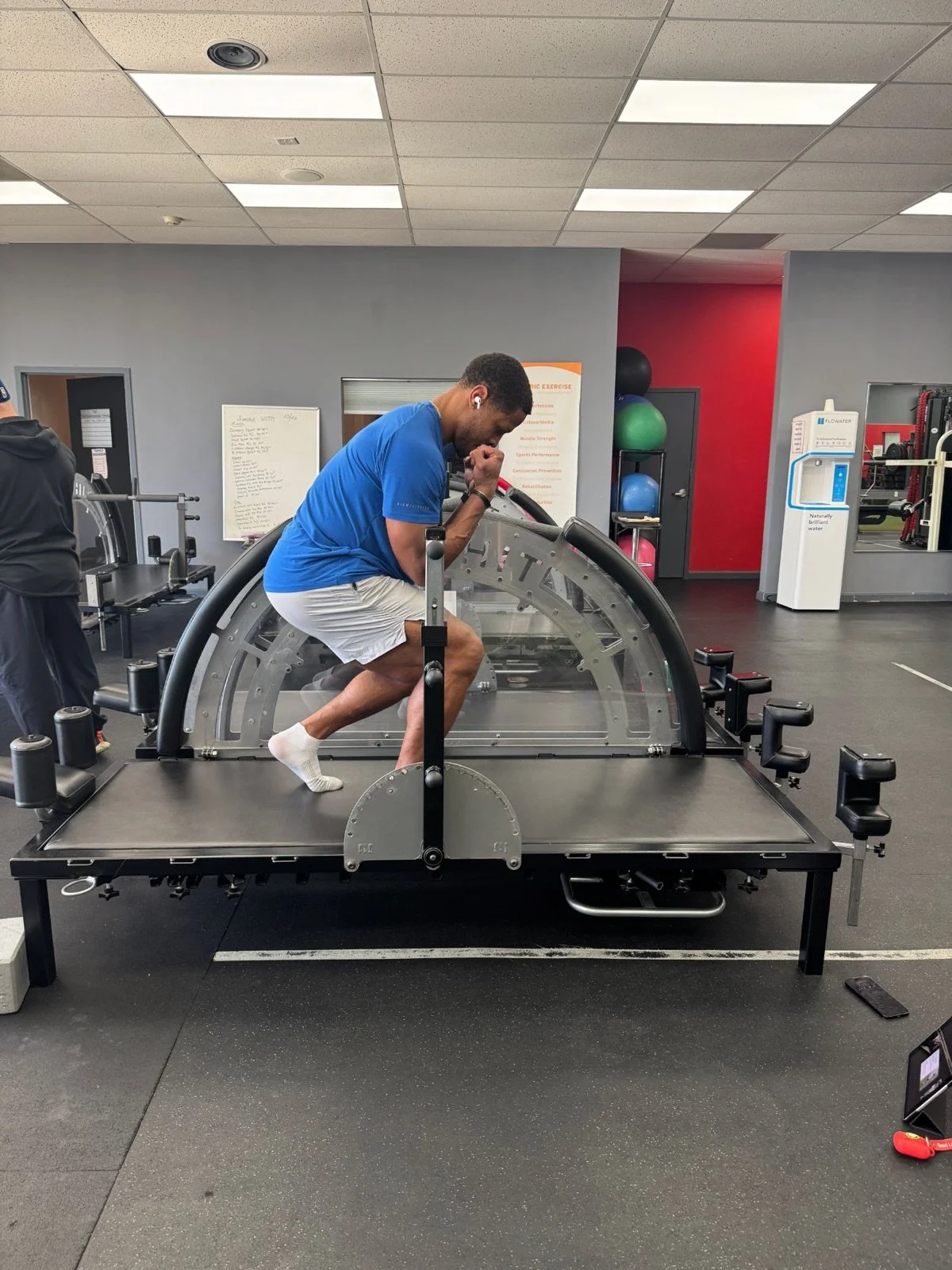
What your first ISOPHIT session looks like
Your first session is short on purpose. Your coach walks you through a handful of positions and watches closely how your body handles each one: your posture, where you brace, where you shake, and what feels good or doesn't. Many first-timers are surprised by how hard a "simple" hold can be.
From there, we build your plan: how often to do ISOPHIT, when to add weights, and what to watch for.
Who this is for
Adults 40+ who want to get strong without getting hurt
Anyone with cranky knees, shoulders or a back that limits what they can do
People coming back after a long break, an injury or surgery (with your doctor's OK)
Athletes who want stronger tendons and better joint stability
Results Fitness Ridgefield is the only facility in Fairfield County offering ISOPHIT. Our members come from Ridgefield, Redding, Wilton, Danbury and Bethel.
Frequently asked questions
Is ISOPHIT better than lifting weights?
For some people, yes. It depends on your goals. If you want to get stronger while protecting your joints and staying out of pain, ISOPHIT may be the better fit. If you want maximum muscle size or power, you'll add weights once your tendons and joints are ready. Either way, it's the safest place to start.
Can isometric training build muscle?
Yes. Hard isometric efforts build strength and muscle. We track it: every client gets a 3D body scan every 30 to 45 days that measures lean mass, so you can see the change for yourself.
Is ISOPHIT safe if I have joint pain?
It's built for low joint stress because nothing moves under load, and your coach chooses angles that stay out of your pain. If you're recovering from surgery or a recent injury, check with your doctor first and tell your coach.
How long until I can start lifting weights?
It depends on where you start. Some members add weights within a few weeks; others with a history of joint problems spend longer on the Foundation. Your coach decides with you, based on your progress.
Start with the Foundation
Not sure where to start? Book a free Success Session. We'll scan your body, check your joints and movement, let you try ISOPHIT, and send you home with a plan, whether or not you join.
Book my free Success Session → · Or call or text (203) 438-8771.
Written by Jean-Pierre Mikhael, owner of Results Fitness Ridgefield.