
Menopause and Muscle: Why Strength Training Is Essential for Women 40+
By Jade Mikhael
Women’s Health | Hormones | Longevity
Menopause changes everything — from hormones to energy to body composition. But one thing stays constant: your body’s ability to adapt, grow stronger, and thrive when you train the right way.
The Truth About Menopause and Muscle Loss
As estrogen levels decline, women naturally lose lean muscle and bone density. This process, called sarcopenia, starts quietly but accelerates after menopause.
Less muscle means slower metabolism, lower energy, more joint discomfort, and a greater risk of injury or falls.
The good news? You can stop — and even reverse — much of that decline through consistent strength training.
Why Strength Training Matters More Than Ever
Cardio has its place, but after 40, strength training becomes non-negotiable. It’s the key to:
✅ Maintaining Muscle Mass: Prevents the natural decline that leads to weakness and fatigue.
✅ Supporting Bone Density: Resistance strengthens bones, reducing osteoporosis risk.
✅ Balancing Hormones: Exercise helps regulate insulin, cortisol, and growth hormone for energy and recovery.
✅ Boosting Metabolism: More muscle = higher resting calorie burn.
✅ Improving Confidence and Mood: Strength training increases endorphins and supports brain health.
You don’t need to lift heavy to see benefits — you just need to lift consistently.
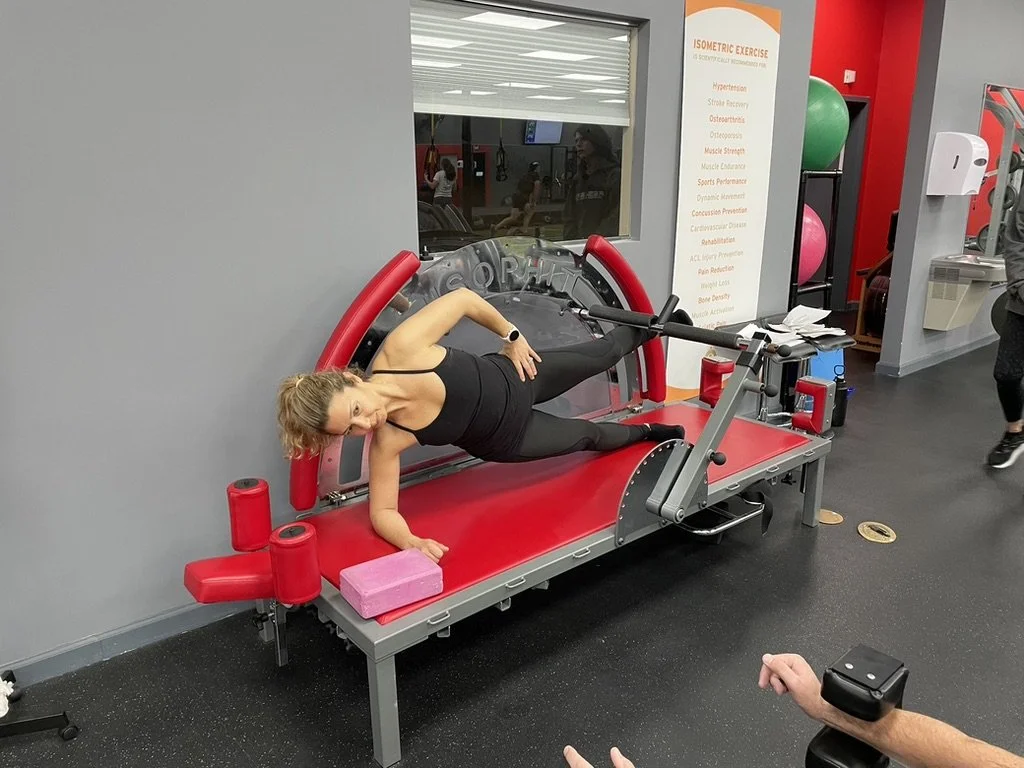
“Strong is the new balanced.”
How Strength Training Supports Hormonal Balance
When hormones fluctuate, your body can feel unpredictable — hot flashes, mood changes, sleep disruption, and fatigue.
Strength training acts like a natural hormone stabilizer by improving circulation, reducing stress, and stimulating the release of feel-good neurotransmitters.
Pairing exercise with proper nutrition, hydration, and recovery (including red-light therapy or ISOPHIT isometrics) helps women navigate this phase with more energy and less frustration.
The Role of Recovery and Nutrition
Recovery is where strength becomes resilience.
Women in midlife often push hard but forget that their bodies need more time to restore balance.
✅ Prioritize protein to maintain muscle and support hormone production.
✅ Focus on sleep and stress reduction to regulate cortisol.
✅ Use active recovery — walking, stretching, or ISOPHIT — to keep circulation and joint health strong.
These small changes compound into big results over time.
“Lifting weights changed everything for me. My energy is up, my mood is better, and I feel like I’m finally in control of my body again.”
— Courtney C, Ridgefield CT
The Bottom Line
Menopause isn’t the end of your strength — it’s the beginning of a smarter chapter.
With proper training, nutrition, and recovery, women can feel better, move better, and look stronger than ever.
Strength training isn’t just about muscles — it’s about empowerment, confidence, and quality of life.
Strong. Balanced. Confident.
Call 203-438-8771 to schedule your consultation and learn how strength training can help you thrive through menopause and beyond.